




Blog [ Eroncall .in ]
				  CERVICAL CANCER AND HPV VACCINE: SURVIVAL
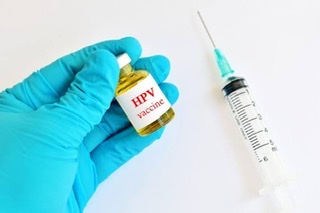
What is HPV vaccine: Its Importance


HPV vaccine or vaccination against Human papilloma virus has emerged as a powerful tool in our fight against cervical cancer in the recent years. Since in almost 95% of cases of cervical cancer , the HPV virus is isolated it has become an important modality in the primary prevention of cervical cancer.


INCIDENCE OF CERVICAL CANCER:


India alone accounts for one-fourth of global burden of cervical cancers. It is estimated that cervical cancer will occur in approximately 1 in 53 Indian women during their lifetime compared with 1 in 100 women in more developed regions of the world. It is the second most commonest form of cancer in women after breast cancer. Approximately, 1.3 lakh new cases of cervical cancer is detected every year in India alone . 67,000 women in India die of cervical cancer alone every year.
Unlike many other cancers, cervical cancer occurs early and strikes at the productive period of a woman's life.
The incidence rises in 30–34 years of age and peaks at 55–65 years, with a median age of 38 years (age 21–67 years).


HUMAN PAPILLOMA VIRUS:
Key facts


There are about 100 types of HPV that affect different parts of the body.
Of those, about 14 types are considered "high risk," for leading to cervical cancer.
 Two HPV types (16 and 18) cause 70% of cervical cancers and pre-cancerous cervical lesions.
HPV infection is a sexually transmitted disease. It is transmitted through sexual contact ; vaginal , anal and oral sex.
Most of the times the disease is self-limiting.
They can cause warts anywhere in the genitalia including in the perianal region and affects both men and women.
HPV infection can increase a man's risk of getting genital cancers, although these cancers are not common.


Cancers Associated with Human Papillomavirus (HPV)

Cervical cancer is the most common HPV-associated cancer.Cancer of the vulva, vagina, penis, anus, and oropharynx (back of the throat, including the base of the tongue and tonsils) are also caused by HPV.

The strategy for primary prevention of HPV is same as any other Sexually transmitted disease: •education about safe sex practices,
•use of latex condoms,
•personal hygiene,
•being in a mutually monogamous relationship.
The infection can be transmitted from both men to women and vice versa.
The most important and prominent strategy that is being adopted worldwide for prevention of HPV infection and cervical cancer is vaccination.


CERVICAL CANCER: STRATEGIES TO FIGHT THE DISEASE:

Who are at risk of contracting cervical cancer:
+
Every woman of reproductive age group who are sexually active are at risk.

+In women having relation with multiple sex partners or having relation with men who have multiple sex partner.

+Women suffering from other STDs and immunocompromised status.

+Early marriage , early childbearing and multiple childbirth

+Use of oral contraceptive pills
+.
Lack of proper hygiene.


Who needs to be screened:


Currently in India there is a lack of organized screening programmes at the government level.
In the private sector facilities for PAP smear are available at the tertiary care centres.

Current WHO guidlines recommend
^
No need for any test for women under 21 years
^
21-29 Should have PAP test every three years
^
30-65 PAP test every 3 years or PAP plus HPV testing every 5 years

^65+ no need for screening

^Women who have undergone hysterectomy donot need screening.

Women who have abnormal Pap results or positive HPV tests often have a follow-up test called a colposcopy, during which a woman’s cervix is closely examined and a biopsy may be taken to look for abnormal cells.

A woman who tests negative for high-risk HPV can be confidently reassured that she has a very low risk of developing cervical cancer before the next round of screening.
Vaccinated women need to continue screening as vaccines donot protect against all HPV virus that cause cancer.

Until now there have been no blood tests to detect HPV infection in blood.


VACCINATION AND PRIMARY PREVENTION:


Vaccination programs have had a major impact on the health and longevity of our population. The HPV vaccine has revolutionized the prevention of Cervical Cancer. These vaccines can reduce cervical cancer deaths by more than 60%.


Characteristics Of HPV vaccination:


HPV vaccine is available in two forms in India
QUADRIVALENT VACCINE: It provides protection against HPV subtypes 6,11,16,18. Thus it can prevent both cervical cancer and genital warts.
BIVALENT VACCINE: It provides protection against HPV subtypes 16, 18 thereby preventing only Cervical cancer.

NONAVALENT VACCINE: This vaccine targets HPV types 6, 11, 16, and 18, the types targeted by the quadrivalent HPV vaccine (4vHPV), as well as five additional types, HPV types 31, 33, 45, 52, and 58. This is not available in India.

HPV VACCINES CAN BE SAFELY GIVEN TO:

People with minor illness like diarrhea , cough cold with or without fever.
Women with abnormal PAP smear test. It cannot provide any therapeutic effect but can protect against reinfection
Immunocompromised patient
.
Breastfeeding women

SHOULD NOT BE GIVEN TO:

People with allergy to any vaccine component
Moderate to severe illness
, Pregnant women: pregnancy test is not recommended before administration of vaccine and if a pregnant woman receives vaccine no intervention needed.
The vaccine is administered through the intramuscular route.

The vaccine can be safely administered with TT, acellular pertussis vaccine , diptheria, poliomyelitis , hepatitis B and influenza vaccine.


VACCINE SCHEDULE:
The vaccination schedule depends on the age of the vaccine recipient. The primary target group in most of the countries recommending HPV vaccination is young adolescent girls, aged 9-14.

The vaccination schedule as recommended by WHO:

*Females <15 years at the time of first dose>a 2-dose schedule (0, 6 months) is recommended.
If the interval between doses is shorter than 5 months, then a third dose should be given at least 6 months after the first dose.

*Females ≥15 years at the time of first dose: a 3-dose schedule (0, 2, 6 months) is recommended.


NB: A 3-dose schedule remains necessary for those known to be immunocompromised and/or HIV-infected.

What happens if the teen is late for the second and/or third vaccine – do you restart the series?
Do not restart - recommendations similar to those for other childhood vaccines. Resume vaccination when teen re-presents for care.
The upper age limit for women to receive HPV vaccination is 26 years. Beyond 26 years the effectivity of the vaccine reduces.

HPV VACCINATION IN MALE:

Studies are underway to determine the usefulness of HPV vaccine in males in prevention of cancers caused by HPV in male population. Even though WHO does not recommend, certain countries have introduced HPV vaccination for boys as well.

Boys can be vaccinated from the age of 9 and the upper age limit for receiving vaccination is 21years. Beyond 21 years the vaccination is not effective. The schedule is same as in females.

It is recommended the best time for your child to get the vaccine is before he or she becomes sexually active. This is because the vaccine works best before there is any chance of infection with HPV.


Cervical cancer is one of the most preventable and treatable forms of cancer as long as it is prevented with HPV vaccination, detected early, and managed effectively.
Features of a successful telephone consultations include:
1. Identifying oneself and the caller, the latter being the patient whenever possible.
2. Gathering information from speech (content, rate rhythm, tone and emotion) and nonspeech sounds (cough, wheeze , background noises)
3. Addressing both the clinical history and patient’s perspective, including social and cultural context.
4. Giving a diagnosis or interpretation of the patient’s problem with an explanation or summary
5. Signposting the point at which a management decision must be made.
6. Making follow up arrangements
7. Making a thorough , contemporaneous note, including the telephone number used in the consultation.